
|
Friday, 2 October 2015
Social class & demographic of my product

Style/ iconography of my product
Font mood board  Albums of existing artists  Inspirational front covers  Posters/artwork from existing bands  |
My reader profile
My indie rock/rock survey

Reader profile animation

Analyzing survey results


This result clearly shows that all the people surveyed were between 14-18 so I will have to make sure my magazine suits what younger people like to view and read so I can attract the right audience. I kind of expected this result as all the people I sent this to were around that age, so next time to make sure the age of people are reliable, I will send it out to more people of different ages.
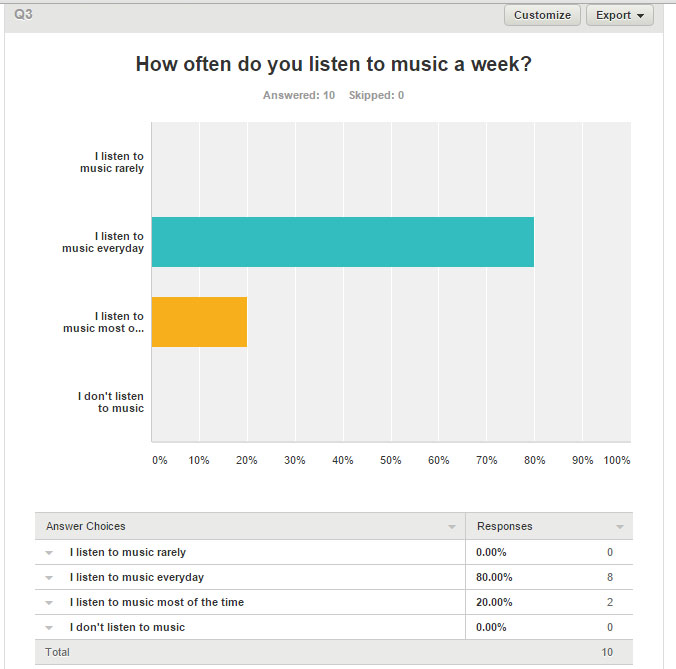

The majority of results show that my audience have a limited income. Due to the age results as well, it suggests that they are students and living at home off their parents rather than themselves. This helps me to understand that I will need a magazine that is priced moderately so they can afford to buy it.


These results show how my audience listen to their music with the main one being via phone. Again if I mention about an artist I can use this new knowledge to give the audience a way of viewing their songs.

Lastly the results of how often they use the internet helps me understand that the internet is a vital role in how my audience socialize or obtain information, so if my magazine was properly manufactured I would also create a website for my audience, so they could view my magazine online and keep up to date with all the content and latest news in my genre.
Reader profile research
What is a reader profile?
A reader profile is information that gives the producer of a magazine or a company an idea of who they are aiming their product at and so therefore using content that relates to them to help sell their product.
Examples of whats in a reader profile:
Demographic information
Hard data like age, gender, income and location.
Psychographic information
Question examples:
- What genre of music do you like?
- What bands and artists do you like?
- How much money do you spend on music concerts a year?
- What's your favourite brand?
- How do you consume music?-download, stream, radio, CD, vinyl
- How many hours per week do you listen to music?
- Which technologies do you use to listen?-phone, CD, Ipod, radio
Existing reader profile
NME reader profile:

What my reader will want?
My reader will want a magazine that clearly links to the rock/indie rock genre by including content and artists that relate to that genre. They will want a magazine that is affordable to them as my audience will also fit into the ABC1 category, and will mostly be students and young adults who will have a limited income.
My reader will also want another way to view my magazine than just print because just like the NME magazine, the audience use modern technology to view a product or subscribe to, as its easy to access.
Possibly my magazine will be slightly aimed more at men to women as my genre is similar to NME's music genre who show that more men read their magazine then women, and also because rock/indie rock genre seems more popular with men.
Purpose of a reader profile
The purpose of a reader profile is so the company of a product they are selling eg magazine can understand who they are selling to and make sure that what they are selling will suit who they are aiming the product to, so therefore they keep someone buying it and earning a profit.
A reader profile will help sell my product as it will help me make sure my magazine suits who I'm selling it to by making it fit in the genre category I've picked and relate to what my audience will like so they will want to buy my magazine again and again.
Genre research


Exiting magazines related to my music genre
 Audience profile
- The age of the audience who like indie rock music would be young, around mid teens to late twenties (16-28).
- The audience would be both male and female who like to listen to that style of music, however there maybe more males who listen to it compared to the number of females.
- Most of the audience tend to be students or people who work in humanities/arts and design. The audience probably wont earn lots or non at all if students but if they do, it would be around £21,000 to £25,000 a year.
- Their interests would be socializing, going to gigs, listening to music on the go (Ipod/phone), wearing skinny jeans and branded t-shirts from popular shops/vintage shops and will probably play an instrument or enjoy indie style films.
Overall I've decided to go with the genre of indie rock music, as it is a style I like and know well. To get an idea of what my magazine should look like I've decided to look at NME and Q mainly, as it links to the style of music I've chosen and the audience I'm aiming my magazine at. From this task I've also learnt what my target audience is like so I can link my magazine to what they enjoy and do hobby wise, so they will continue to buy the magazine if massed produce.
Summary of conventions
Keywords featured on a front cover, contents page and double page spread:
- Masthead: title used to make readers familiar to the magazine they are reading.
- Main image: used to show person(s) or object that's linked to the main article.
- Sell line: headline below masthead to inform viewers of content inside magazine.
- Plug: promotion,logo or freebie in magazine to draw in audience
- Tag: word or phrase to engage reader into a story eg Exclusive.
- Barcode, issue number, date and price
- Skyline and footer: stripes below and above magazine to give extra information, mostly interesting parts of the magazine.
- Drop-cap: first letter in an article that is usually bigger or different then rest of text
- In-house: Trademarks of the magazine eg colour scheme
- Slug: trademark logo for paticular sections eg reviews have a different slug to interviews
- End marker: fancy full stop at the end of an article.
- Pull quotes: enlarged quotes

Subscribe to:
Posts (Atom)